
Intermodal freight shipping 2026 provides cost reductions of 10 to 40 percent compared to over-the-road trucking, with current rates for high-volume lanes like Chicago to Los Angeles averaging $1,800 to $2,400 per shipment. Shippers can secure these savings and improve network resiliency by selecting providers with established rail relationships and prioritizing fuel-efficient strategies during their upcoming RFP cycles.
As we approach 2026, many shippers find themselves trapped between rising OTR rates and increasingly aggressive sustainability mandates. Relying solely on truckload capacity is no longer a viable strategy for long haul logistics; the volatility of diesel prices and shifting driver availability require a more nuanced, multimodal approach. This guide examines the critical synergy between rail and truck that will dominate the freight landscape in the coming years. You will learn how to navigate the intermodal cost gap, optimize first and last mile drayage, and establish operational reliability. We also detail why selecting a broker with MWBE and SAM.gov registration is a strategic necessity for high level compliance and contract security. By mastering these intermodal pillars, your supply chain will transition from reactive management to a sophisticated, cost effective engine.
The 2026 Intermodal Landscape: Why Rail Truck Synergy is Dominating the Market
The intermodal freight shipping 2026 landscape is defined by a shift from reactive cost-cutting to proactive supply chain resilience. Recent market reports indicate a steady 0.7 percent year over year volume increase in intermodal movements, signaling a departure from the volatility seen in previous cycles. Shippers are increasingly pivoting toward rail truck synergy as traditional truckload capacity tightens and diesel prices remain a volatile variable, making over-the-road options less predictable and more expensive for long-haul lanes.
While intermodal was once viewed simply as a slower, lower-cost alternative to trucking, it has evolved into a strategic necessity for modern logistics managers. By integrating the long-haul efficiency of rail with the precise door-to-door flexibility of professional drayage, companies can stabilize their overhead and secure capacity long before peak seasons hit. Archangel Global Logistics plays a critical role in this ecosystem by connecting shippers with reliable Class I railroads and specialized carrier networks. We ensure that the transition between modes is seamless, helping our clients leverage certified intermodal services to maintain cargo flow when the highway market becomes oversaturated.
In 2026, the decision to move freight via rail is often driven by the need for consistent performance and environmental compliance. A single intermodal train can move freight at roughly one-third the fuel cost per ton-mile compared to heavy-duty trucks. This efficiency provides a vital buffer against fuel surcharges and ensures that supply chains remain functional. For organizations managing MWBE government contracting, these efficiencies are even more vital for meeting performance requirements while adhering to specific set-aside compliance standards.
Intermodal vs Truckload Cost Comparison: Navigating the 2026 Rate Gap
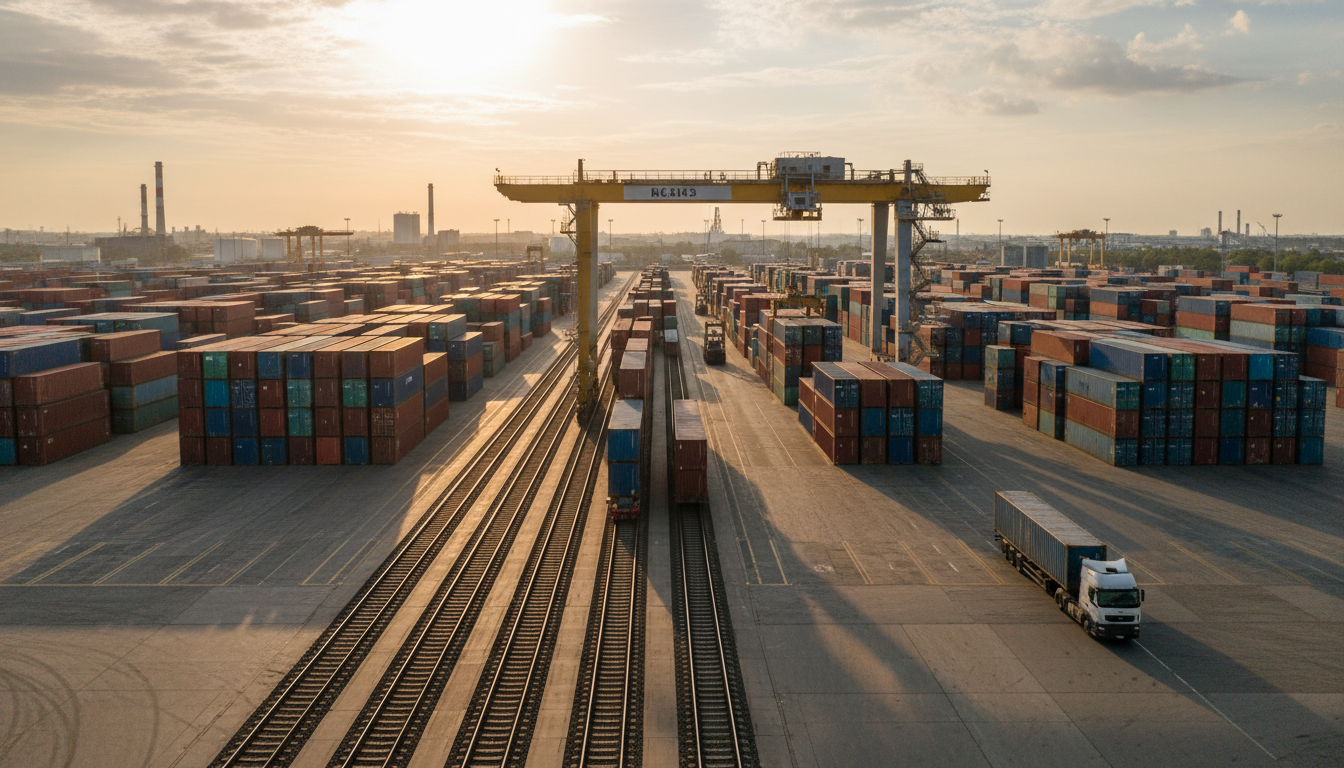
Shippers often fall into the Linehaul Rate Trap, a common oversight where procurement decisions are based solely on the base freight rate without accounting for the total cost of the move. In the context of intermodal freight shipping 2026, the real value lies in the 10 to 40 percent cost advantage that rail-based solutions maintain over traditional truckload on lanes exceeding 500 miles. While spot rates for trucks can fluctuate wildly based on immediate driver availability, intermodal rates remain anchored to long-term rail efficiencies.
Consider a high-volume corridor like Chicago to Los Angeles. A standard over-the-road (OTR) truckload might cost upwards of $2,400, whereas a door-to-door intermodal solution typically hovers between $1,800 and $2,000. This $600 difference per load stems largely from fuel consumption. Because rail is three to four times more fuel-efficient per ton-mile than heavy-duty trucks, the fuel surcharges applied to rail movements are significantly lower and more stable. As diesel costs rise, truckload rates escalate at a much steeper trajectory than rail-adjusted surcharges; this widening rate gap makes rail the dominant choice for transcontinental freight.
For organizations managing MWBE government contracting or those adhering to a Small Business Set-Aside Guide, these savings are essential for maintaining competitive pricing on prime contracts. The stability of intermodal pricing allows for more accurate long-term budgeting, which is a critical factor in government and enterprise-level logistics. However, a complete comparison must include origin and destination drayage, chassis fees, and potential per-diem costs. By utilizing certified intermodal services, shippers can ensure these accessorials are factored into the initial quote, avoiding the hidden fees that often erode the perceived savings of the rail.
Strategic Mode Selection: When to Choose Intermodal Over OTR Truckload
Selecting the appropriate mode requires more than a cursory glance at linehaul rates. A data-driven decision framework for intermodal freight shipping 2026 focuses on three primary variables: distance, volume predictability, and transit sensitivity. Generally, intermodal becomes the mathematically superior choice for lanes exceeding 500 miles where freight is palletized or containerized and timelines allow for moderate flexibility.
Factor | Intermodal Preference | Truckload (OTR) Preference |
|---|---|---|
Distance | Over 500 miles | Under 500 miles |
Lead Time | Flexible (5 to 7+ days) | Urgent (1 to 3 days) |
Volume | Consistent, recurring | Irregular, spot-based |
Weight | High density; lower limits | Standard 45,000 lbs |
Logistics managers must account for inventory carrying costs to avoid a false economy. Intermodal transit typically adds one to two days compared to over-the-road trucking. If a company calculates its daily inventory carrying cost at $200 to $400 per load, a two-day delay represents a $400 to $800 overhead. If the rail freight savings on a long-haul lane are $1,000, the net benefit remains positive. However, for high-value goods or products with narrow shelf lives, that transit gap might favor the speed of a truck.
For businesses operating under a Small Business Set-Aside Guide, mode selection also involves balancing cost efficiency with contract performance requirements. Archangel Global Logistics assists shippers in running these lane-by-lane analyses; we ensure that certified intermodal services are deployed only where the numbers support both the budget and the delivery window. This strategic approach prevents the operational friction caused by choosing rail for a time-critical, irregular route.
Intermodal Drayage Best Practices: Securing the First and Last Mile
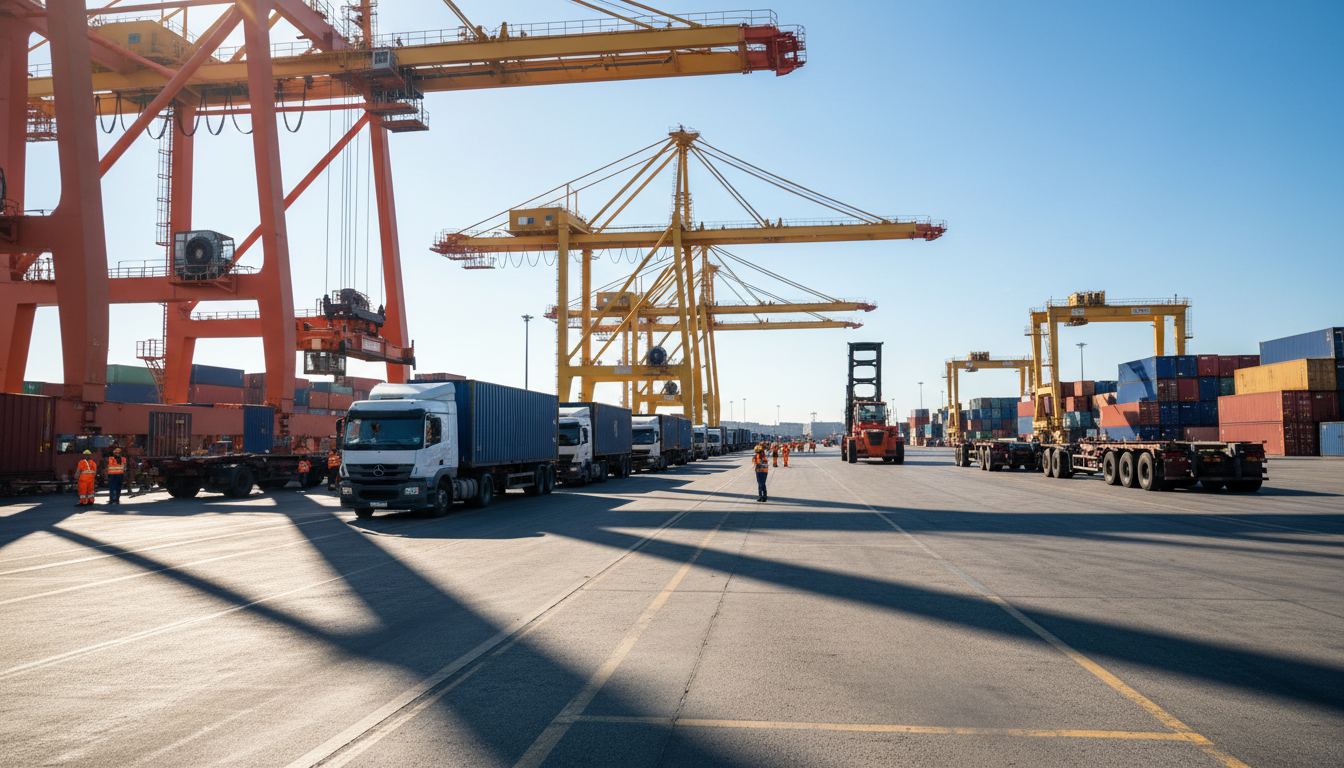
Shippers often confuse drayage with the broader scope of intermodal freight shipping 2026. While intermodal represents the entire multi-mode journey, drayage is the specialized, short-haul trucking segment that moves a container between a rail ramp or port and the shipper’s facility. Because the rail portion is highly standardized, the first and last mile drayage segments are where most delays and hidden costs occur. Strategic planning, such as transloading cargo into local equipment near major hubs, can significantly reduce terminal dwell times and bypass equipment shortages at congested rail yards.
To ensure a successful handoff, logistics managers must focus on three technical areas often overlooked in over-the-road trucking:
Weight Distribution: Unlike highway transit, rail travel involves significant longitudinal forces during coupling. Cargo must be centered and balanced; uneven weight distribution can lead to rail-specific penalties or, in extreme cases, the rejection of the container at the gate.
Vibration Protection: Rail transit creates harmonic vibrations that differ from the movement of a truck trailer. Shippers should use heavy-duty blocking and bracing to prevent internal shifting.
Equipment Coordination: Secure the chassis and container well in advance to avoid per-diem charges at the terminal.
Archangel Global Logistics coordinates these complex handoffs by synchronizing drayage carriers with rail schedules to minimize gate wait times. By leveraging certified intermodal services, shippers benefit from a managed network that understands the nuances of terminal operations. For those managing MWBE government contracting or utilizing a Small Business Set-Aside Guide, this specialized coordination ensures that the first and last mile remain as cost-effective as the long-haul rail segment.
Operational Reliability and ETA Confidence: The New Service Metrics
While the first and last mile require tactical precision, the long-haul segment of intermodal freight shipping 2026 is being redefined by a shift from basic tracking to ETA Confidence. In a market where supply chain predictability is often valued over raw speed, logistics leaders are moving away from reactive updates. They are prioritizing multi-carrier solutions that offer a unified view of the journey. Modern performance is measured against granular benchmarks; current industry averages show linehaul train speeds hovering around 20.4 MPH and terminal dwell times at approximately 23.3 hours. These metrics provide a realistic baseline for calculating total transit time, allowing shippers to manage downstream expectations with high degrees of accuracy.
The historical visibility gap between over-the-road trucks and rail cars has narrowed significantly through advanced technology integration. Leading Transportation Management Systems (TMS) now ingest real-time data directly from Class I rail carriers, merging it with drayage GPS pings to create a single source of truth. This integration eliminates the black hole effect often associated with rail yards and interchanges. Shippers utilizing certified intermodal services benefit from this digital architecture, as it allows for automated alerts the moment a container deviates from its scheduled milestone.
For companies managing complex contracts, especially those involving MWBE government contracting, these reliability metrics are non-negotiable. Operational reliability in 2026 is not merely about the absence of delays; it is about the ability to predict and communicate them before they impact the production line or the final delivery. Archangel Global Logistics focuses on these service metrics to ensure that every move aligns with the rigorous standards required for Small Business Set-Aside Guide compliance and enterprise-level logistics planning.
Selecting a 2026 Intermodal Broker: Why MWBE and SAM.gov Registration Matters

Choosing a partner for intermodal freight shipping 2026 requires moving beyond basic rate shopping to prioritize credentialed accountability. While many large scale brokerages focus on sheer volume, the most successful shippers in the current market select partners based on their ability to navigate specific compliance frameworks and diversity mandates. When evaluating a prospective broker, utilize this checklist to verify their operational depth:
Core Competency: Does the broker specialize in the complex coordination of rail ramps and drayage, or are they a truck-first firm only occasionally utilizing rail?
Compliance Engine: What is the process for vetting carrier safety ratings, insurance expirations, and intermodal equipment provider (IEP) reliability?
Visibility Integration: Can the broker provide milestone data that feeds directly into your internal supply chain planning tools?
Diversity and Registration: Can the broker support specific contract set-asides or corporate diversity goals?
Archangel Global Logistics LLC differentiates itself by offering more than just certified intermodal services; we provide the specific credentials required by government primes and major corporations. Being MWBE Certified and SAM.gov Registered in Florida (MC-1782914 | DOT-4522911) allows us to serve as a strategic link in the supply chain for organizations following a Small Business Set-Aside Guide.
This status is a commitment to the rigorous documentation and reporting standards necessary for MWBE government contracting. By choosing a broker with these specific registrations, logistics managers ensure that their freight spend contributes to mandatory diversity targets while maintaining the high operational standards required for national and cross-border movements. This credentialed approach bridges the gap between massive rail networks and the granular compliance needs of modern enterprise and government shipping.
Successfully navigating the intermodal landscape in 2026 requires a strategic blend of rail efficiency and trucking flexibility to keep costs low. While internal planning is a great start, the complexities of modern freight often benefit from specialized oversight. If you want expert help refining your shipping strategy, you might explore our full range of Services to find a tailored solution. Our team is here to help you simplify your supply chain through proven logistics management and reliable broker partnerships.